Restoration Guide · Updated July 2026
Fire Damage Restoration in Delaware
What to do in the first 24 hours after a house fire — a step-by-step guide for Delaware homeowners covering the restoration process, insurance claims, realistic costs, and how to avoid costly mistakes.
A house fire is one of the most disorienting experiences a homeowner can face. But what you do in the first 24 hours — and who you call — determines how much of your home can be saved.
In Delaware, fire departments respond to over 2,000 residential structure fires every year. Kitchen fires, electrical faults, heating equipment malfunctions, and chimney fires are the most common causes — and every one of them leaves behind damage that goes far beyond what's visible.
Smoke seeps into wall cavities, water from firefighting saturates floors and ceilings, and within 48 hours, mold begins to grow in damp drywall. The restoration process isn't just about replacing what burned — it's about addressing every layer of damage before it compounds.
This guide walks you through the full fire damage restoration process as it happens in New Castle, Kent, and Sussex counties — from the emergency call to the final walkthrough, with real local costs, insurance navigation tips, and the steps that most homeowners miss.
The Restoration Timeline
From emergency call to move-back day — the 7-phase process
Emergency Board-Up & Tarping
The first priority is securing the property. Broken windows, burned-out walls, and roof damage leave your home exposed to weather, animals, and intrusion. Emergency board-up and roof tarping stop additional damage before it starts — and most homeowner policies require you to take these steps to prevent further loss.
Damage Assessment & Safety Inspection
A certified restoration team inspects structural integrity, electrical hazards, water damage from firefighting, and smoke penetration depth. This assessment becomes the foundation of your insurance claim — every affected area gets documented with photos, moisture readings, and written scope notes.
Water Extraction & Drying
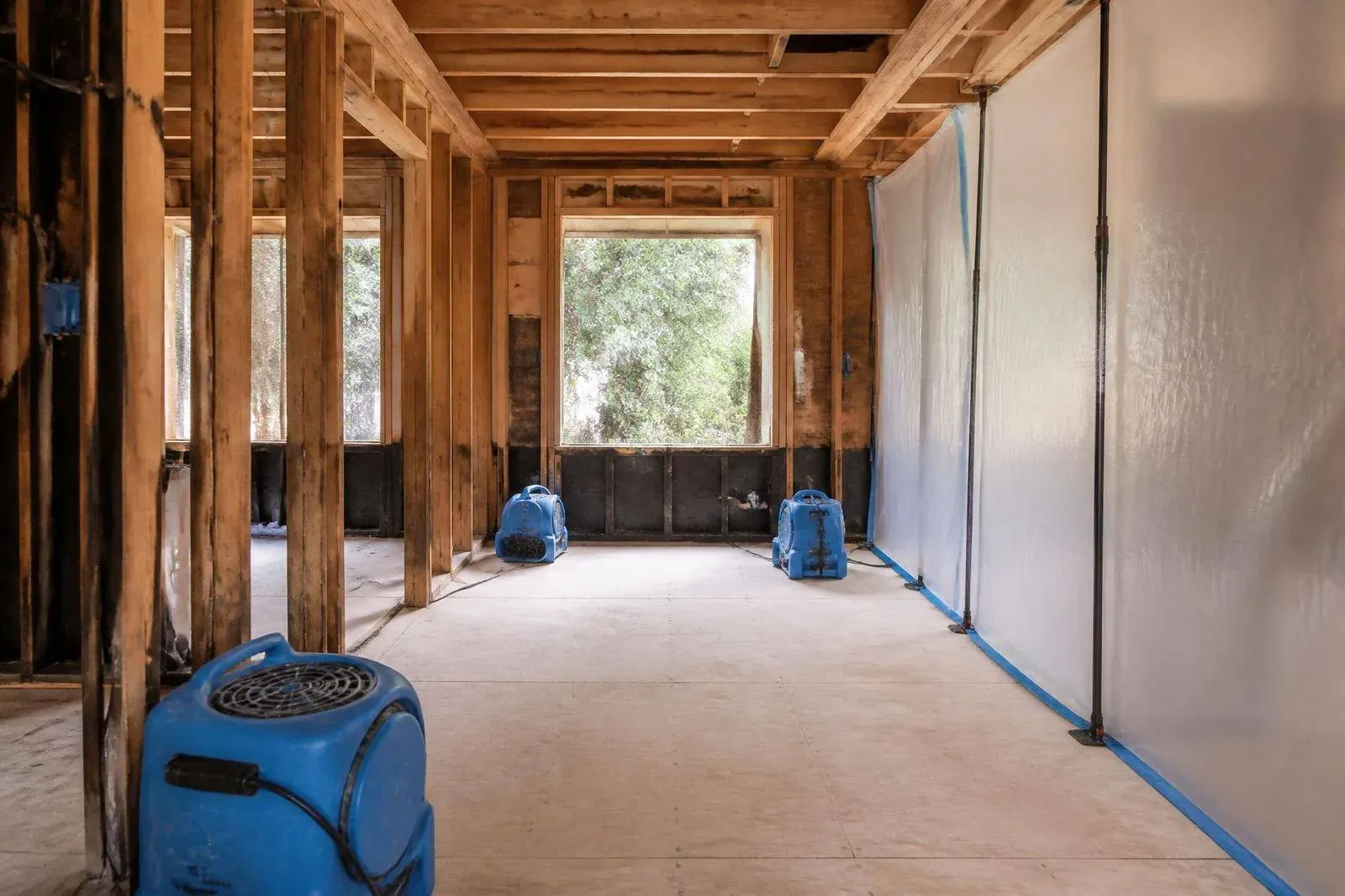
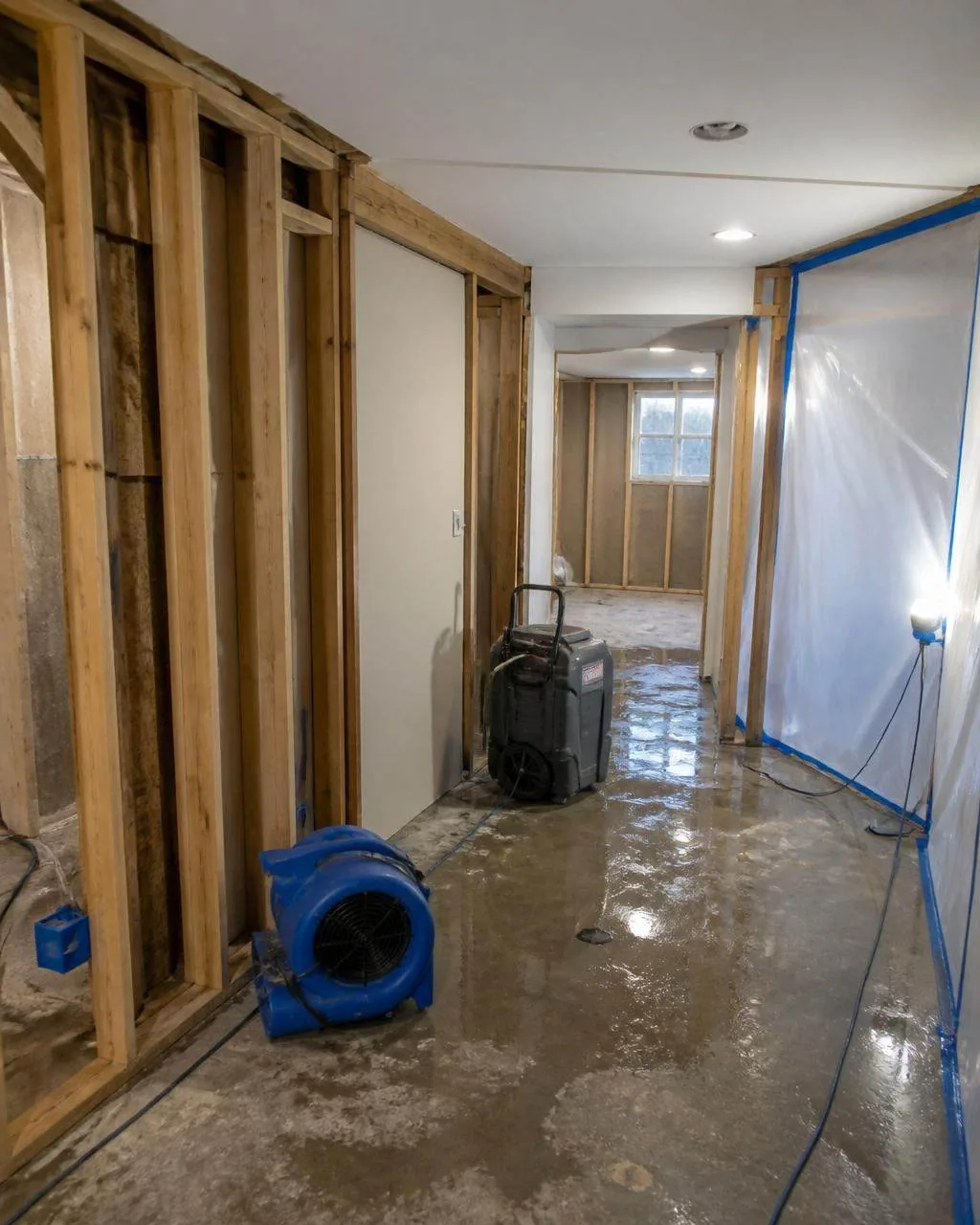
Firefighting efforts often leave behind thousands of gallons of water. Standing water in basements, soaked drywall, and saturated subfloors must be extracted and dried before mold takes hold — typically within 48–72 hours. Commercial dehumidifiers and air movers run continuously during this phase.
Smoke & Soot Removal
Smoke residue is acidic and corrosive — it etches glass, discolors paint, and embeds itself in every porous surface. Professional removal involves HEPA vacuuming, chemical sponge cleaning, thermal fogging, and ozone or hydroxyl treatments to neutralize odors at the molecular level.
Contents Pack-Out & Cleaning
Salvageable belongings are inventoried, packed out, and cleaned off-site. Furniture, clothing, electronics, and documents each require different restoration methods. An itemized inventory supports your contents claim and helps you track what was saved vs. what needs replacement.
Structural Repairs & Reconstruction
This is where Dream Craft Builders takes over fully. Framing repaired, drywall replaced, electrical rewired, plumbing restored, and finishes brought back to pre-loss condition — or better. We coordinate with your adjuster throughout so the scope stays aligned with your coverage.
Final Cleaning & Restoration
A deep clean of every surface, HVAC duct cleaning, air quality testing, and final walkthrough. When we hand the keys back, the home smells clean, looks finished, and is safe to live in.
Insurance Claims
How to navigate your insurance claim — and get what you're owed
The claim process can feel adversarial, but it doesn't have to be. These four steps give you the strongest position from day one — and having a restoration contractor who speaks "insurance" makes the difference between a settlement that covers the job and one that leaves you short.
Call your insurer immediately
Most policies require prompt notification. Ask for an advance against your additional living expenses (ALE) coverage — this pays for your hotel, meals, and essentials while you're displaced.
Document everything before cleanup starts
Take photos and video of every room, every angle. Don't throw anything away until the adjuster has seen it. This is the single most important step for a fair settlement.
Keep receipts for emergency expenses
Boarding, food, clothing, toiletries — all covered under ALE. Save every receipt. If you pay for emergency board-up or temporary repairs, your insurer reimburses those costs.
Get your own estimate before accepting the insurer's
Insurance adjusters work for the carrier. A contractor-prepared scope and estimate gives you leverage. Dream Craft Builders provides a detailed, line-item estimate that makes it easy to compare against the adjuster's version and negotiate line by line.
Real Numbers
What fire damage restoration costs in Delaware
No two fires are the same, and the final number depends on fire size, water damage, smoke penetration, and the home's age. These are the factors that move the budget the most.
Fire type & spread
Grease fires are more contained than electrical fires that spread through walls. A room-and-contents fire averages $15K–$40K; a whole-home fire with structural damage often exceeds $100K.
Water damage from firefighting
Ceilings collapsed from water weight, soaked insulation, and saturated subfloors can equal or exceed the fire damage itself in restoration cost.
Smoke penetration depth
Light smoke in one room vs. heavy protein smoke throughout the house — the difference can be $5K vs. $25K+ in cleaning alone.
Asbestos & lead abatement
Older Delaware homes built before 1978 may require lead paint containment, and pre-1980s homes often have asbestos in insulation or flooring disturbed by fire — abatement adds $3K–$15K.
Contents restoration
Professional contents cleaning and storage for a 3-bedroom home typically runs $8K–$25K, depending on how much is salvageable.
Delaware-Specific
What Delaware homeowners should know
Older home stock in Wilmington & Newark
Many homes in Wilmington's Trolley Square, Forty Acres, and Newark's older neighborhoods were built before 1970. Fire restoration in these homes often triggers asbestos abatement and lead paint containment requirements under Delaware code — factors that can add $5,000–$15,000 to the restoration budget. We carry the proper certifications so this doesn't stall your project.
Newer construction in Middletown & Dover
Post-2000 homes in Middletown, Smyrna, and Dover rarely have asbestos or lead concerns, and modern electrical systems limit fire spread. Restoration here is typically faster — fewer code-compliance surprises and more straightforward structural repairs.
Delaware permit requirements
Fire damage reconstruction requires building permits in every Delaware municipality. New Castle County, the City of Wilmington, and the City of Newark each have their own permit offices and inspection schedules. Dream Craft Builders handles all permitting — you won't spend a minute at the county office.
24/7 response across Delaware
Fires don't wait for business hours. Our emergency response team is available 24/7 across New Castle, Kent, and northern Sussex counties. We can have a crew on-site within hours of your call for board-up, tarping, and immediate mitigation — the steps your insurance policy requires to prevent further damage.
FAQ
Fire damage restoration questions
Fire damage doesn't wait — and neither do we
24/7 emergency response across Delaware. We handle board-up, mitigation, insurance claims, and full reconstruction — one team, one call, no runaround.
Serving Newark, Wilmington, Middletown, Dover, Smyrna, Hockessin, Bear, Glasgow & Pike Creek.